


Social Studies Students at ISG Dammam Step into the Role of Ancient Scribes While Exploring Mesopotamian Civilization
SHARE
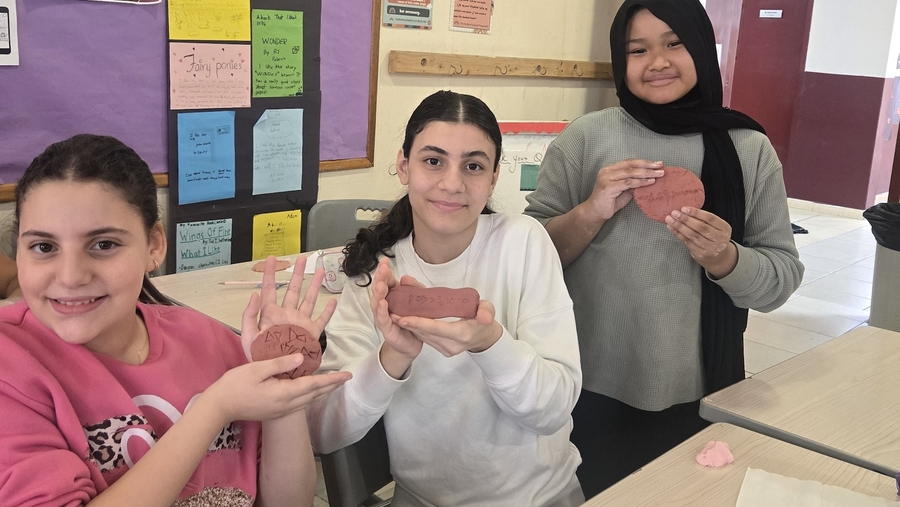
In a lively classroom at ISG Dammam, Ms. Nadia Iqbal’s social studies students journeyed thousands of years into the past to experience life in ancient Mesopotamia. Transforming into young scribes, students worked with clay tablets and styluses to learn the intricate writing system of cuneiform, focusing on the Babylonian dialect. The classroom buzzed with concentration and excitement as students carefully pressed wedge-shaped symbols into clay, recreating one of humanity’s earliest forms of written communication.
This hands-on activity was designed around experiential learning, allowing students to move beyond textbooks and engage directly with history. By simulating the work of ancient scribes, students gained insight into how writing was used to record laws, trade, stories and daily life. The tactile process of shaping clay and forming symbols helped them appreciate both the skill required and the importance of written language in building and sustaining early civilizations.
One of the most memorable moments came when students successfully wrote their own names in cuneiform. Seeing their identities represented in an ancient script sparked genuine excitement and a strong sense of accomplishment. The activity made history personal and meaningful, bridging the gap between the ancient world and modern learners.
Following the writing session, students participated in a guided class discussion to reflect on what they had learned and how the experience changed their understanding of the past. This thoughtful exchange encouraged deeper thinking and allowed students to share discoveries with their peers. Through creativity, inquiry and collaboration, the project left students with a lasting appreciation for the ingenuity of ancient societies and the enduring power of written communication.
Related News